
I never expected that I would almost get scammed through something as casual as a Twitter (X) conversation. I always thought of myself as reasonably tech savvy, careful with strangers, and aware of social media dangers. Yet one evening, I found myself staring at my phone with my heart pounding, realizing just how close I had come to sending money to a complete stranger that I had never met in real life. That was the moment I understood that an online dating scam on Twitter (X) does not start with obvious threats or crude messages. It starts with charm, attention, and something that feels a lot like connection. I decided to write about this experience after one particularly close call left me shaken and humbled, and made me see how easily anyone can get pulled into an online dating scam on Twitter (X), even if they think they know better.

Why I Was Vulnerable To A Twitter Connection
At the time this happened, I was going through a quiet and lonely phase in my life. Work was remote, my social circle had shrunk, and most of my conversations were happening through screens. Twitter (X) had become my place to vent about work, share random thoughts, and reply to jokes and memes. It felt casual and low pressure. I was not actively looking for love on a dating app, but I also was not completely closed off to the idea of meeting someone interesting online.
Most of my interactions were light. I liked posts, replied to threads, and occasionally had back and forth banter with people who seemed funny or thoughtful. Over time, I noticed that my guard started to drop. When you see the same usernames in your notifications every day, they start to feel familiar, even if you know absolutely nothing about who they really are. That blurred line between follower and friend is exactly where a Twitter dating scam can sneak in.
How "Goth Chloeee" Slid Into My DMs
The story really began when I started seeing a particular account in my feed more often. The username was something like "Goth Chloeee," and the profile picture showed a woman with black eyeliner, dyed hair, and that kind of soft alt aesthetic that is popular online. The bio mentioned music, mental health, and late night thoughts. It struck the right balance of mysterious and relatable.
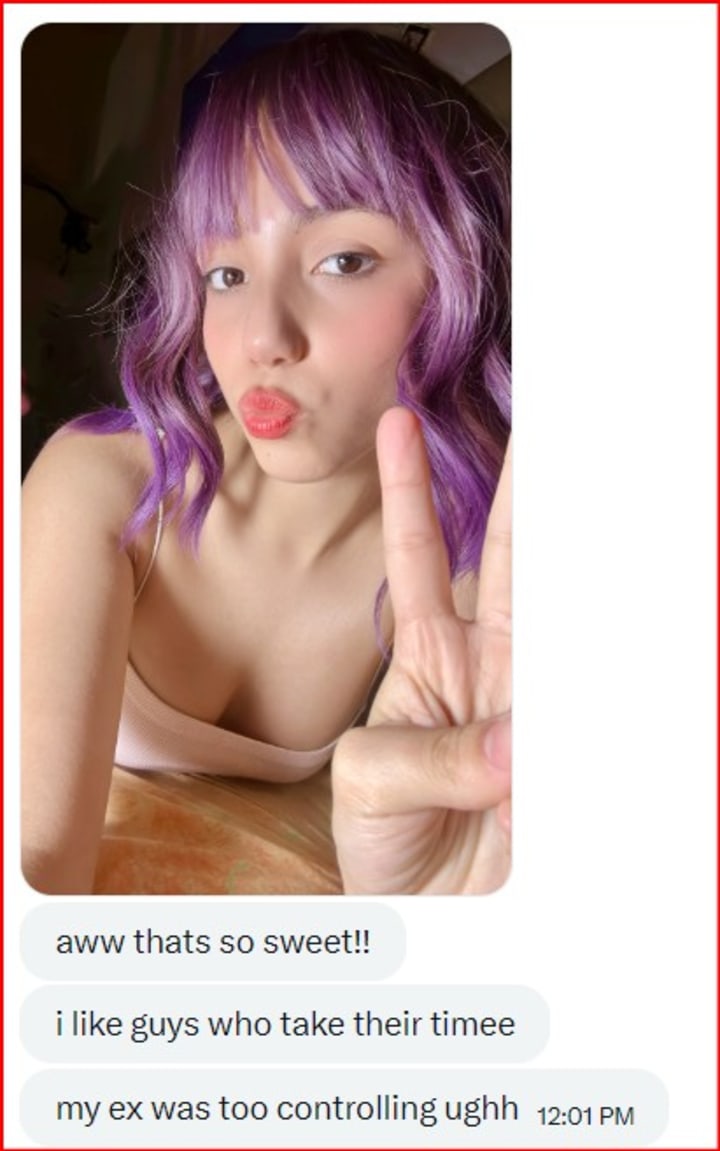
At first, it was harmless. She liked my tweets about music and replied to a joke I made about staying up too late. The replies were playful and quick, the kind that make you feel that someone is actually paying attention to you. After a few days of interacting publicly, she sent a DM. It was simple: a message about how one of my tweets had made her laugh at the right time. That is how many social media romance scams begin, not with an aggressive push, but with a gentle, flattering opening that feels oddly thoughtful.
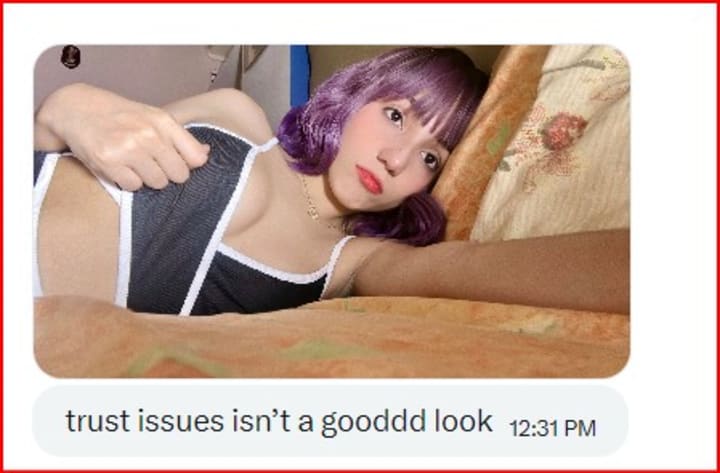
From there, our conversation moved fast. We talked about favorite bands, bad sleep schedules, annoying coworkers, and the feeling of drifting through life while staring at screens late at night. She would send screenshots of playlists, random selfies in dim lighting, and little voice notes that made everything feel more real. I remember thinking that this did not feel like a bot or a generic spam account. It felt like a person who understood the same online exhaustion that I did.
The Emotional Hooks That Made It Feel Real
Looking back, I can see how carefully the emotional hooks were placed. At the time, it just felt like two people opening up. She shared that she had struggled with depression and anxiety, and that Twitter (X) was one of the few places she felt safe expressing herself. She hinted that most people in her life did not "get it," but that she liked how I listened and responded without judging.
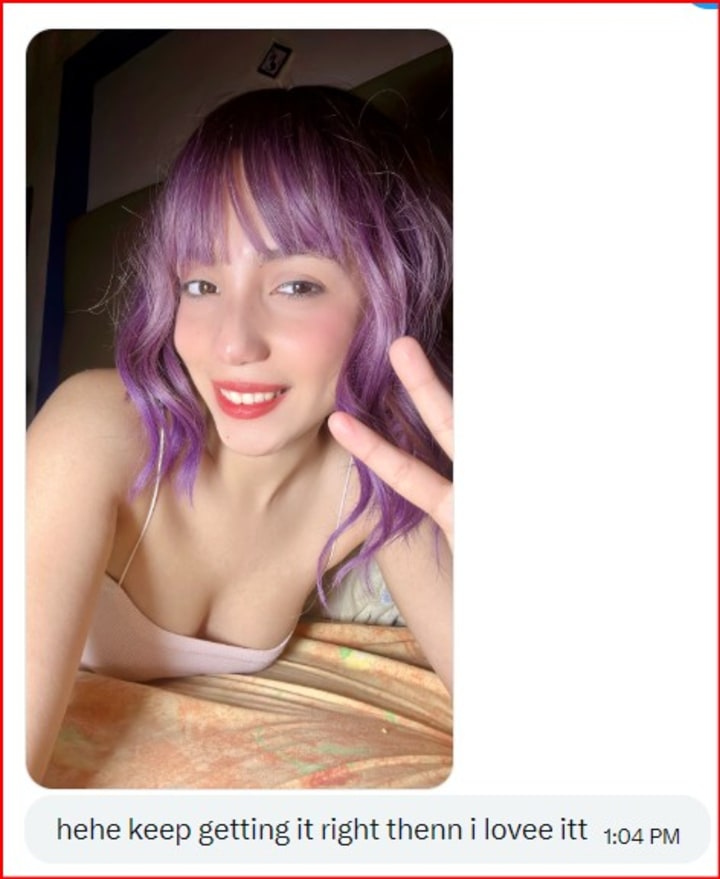
Those confessions made me lower my guard. When someone talks about mental health and loneliness, it feels cruel to question their motives. That is one reason social media romance scams are so effective. Scammers know that vulnerability disarms people. She praised me for being "different from most guys online" and told me I seemed "genuine" and "safe." Words like that land differently when you have been feeling isolated.
Another emotional hook was the subtle romantic tension. She did not jump straight into flirting, but over time she dropped lines about wishing she had someone to watch movies with, or how she felt like we had known each other longer than we actually had. When I replied with similar thoughts, she matched that energy instantly. It felt organic. I told myself that this was not a Twitter dating scam. It was just one of those modern love stories that starts in a DM.
The Red Flags I Ignored At First
The first red flag appeared when I noticed that her tweets did not quite match the personality I saw in our private chats. In public, most of her posts were generic quotes, reposted images, and vague emotional statements that could apply to anyone. In private, she was sharp, specific, and very engaged. I told myself that maybe she was just shy or careful with her public image.
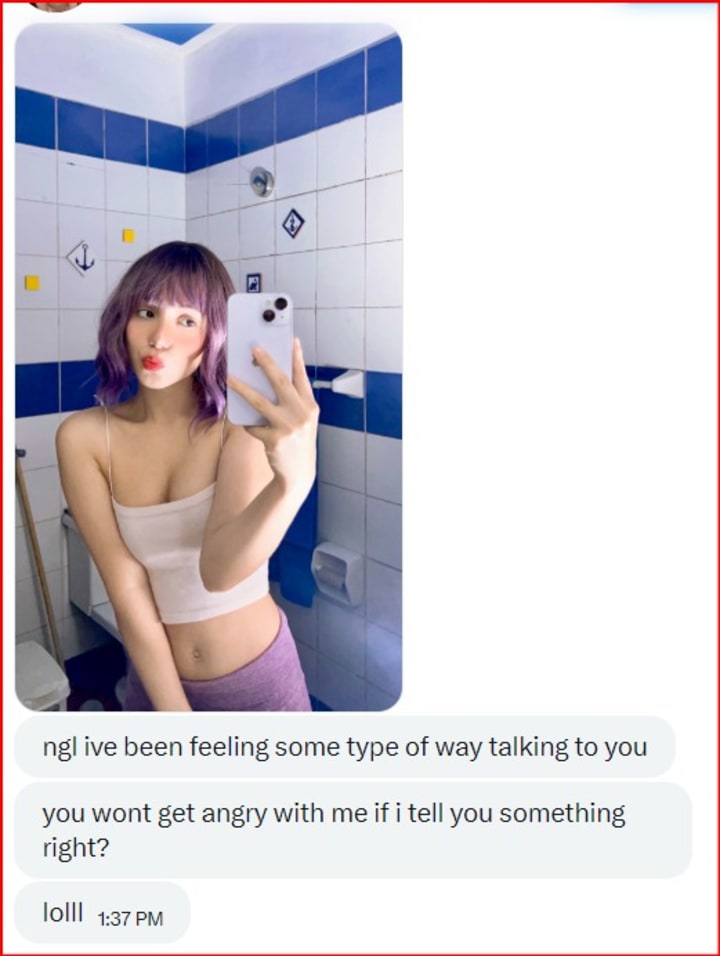
The second red flag was the pattern of her photos. The pictures were attractive, but somehow a little too polished and stylistically consistent. It was like they had been pulled from a curated Instagram feed rather than taken spontaneously. In one of our conversations, I casually asked for a new selfie, something simple like "show me your coffee mug or your messy desk." She replied with a photo that looked more like a model shot, with perfect lighting and framing. It did not match the request.
There were also small inconsistencies in her story. She told me she lived in one city, then later mentioned being in another city for an oddly long "visit" that did not quite line up with the previous timeline. When I asked small follow up questions, she dodged them and quickly shifted to emotional topics, like feeling misunderstood or tired of fake people. Every time my rational brain started to question things, she would send a heartfelt message that made me feel protective and sympathetic.
The truth is that I saw these signs, but I did not want them to be signs. I wanted the connection to be real. That desire is exactly what a Twitter dating scam relies on. It is not just about tricking your mind. It is about nudging your emotions to argue against your logic.
When The Twitter Dating Scam Finally Showed Its Hand
The turning point came late one night after we had been talking for a couple of weeks. The conversation had been especially intense. She had talked about feeling overwhelmed, hinted at money problems, and mentioned being scared about rent and groceries. I felt that familiar tug of wanting to help someone I cared about.
Then came the message that changed everything. She said she was in a difficult spot, that her bank account had been temporarily frozen because of a "technical issue," and that she had no access to funds for a few days. She said she had tried asking people in her life, but they were "tired of her problems," and that she did not know who else to turn to. After a few more messages building up the emotional pressure, she finally asked if I could send her some money to "hold her over" for a short time.
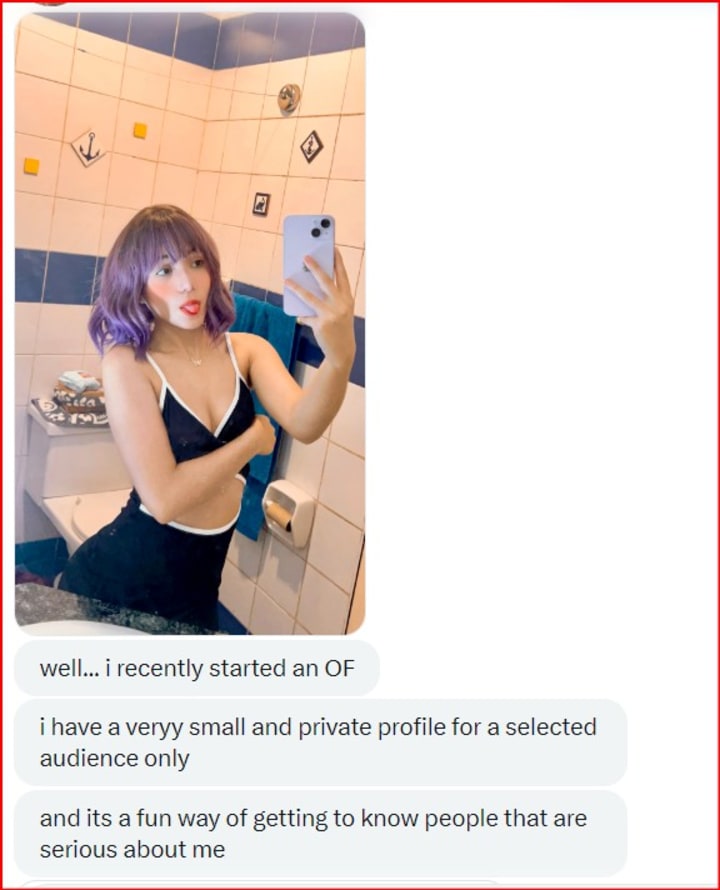
She framed it as a small favor, something between two people who were close. She hinted that it would prove I was not like "the others" who had abandoned her. This is exactly how many online dating scams on Twitter (X) try to monetize trust. The scammer builds a bond, creates urgency, and then uses that emotional leverage to make you feel that saying no would mean you are cruel, heartless, or fake.
She suggested that I send the money through a method that would be hard to reverse, making it seem like the most convenient option. She also avoided video calls again, saying she felt "ugly" and "anxious," even though she seemed comfortable sending those polished selfies. Suddenly, all the tiny doubts that I had pushed aside started rushing back in.
The Moment I Stepped Back And Tested The Story
When I read her money request, my first instinct was actually to help. My brain jumped to solutions, calculating how much I could spare and how soon I could send it. But there was a second voice in my head whispering that something was off. I remembered warnings I had seen in articles about social media romance scams, where the request for money was always the key turning point.
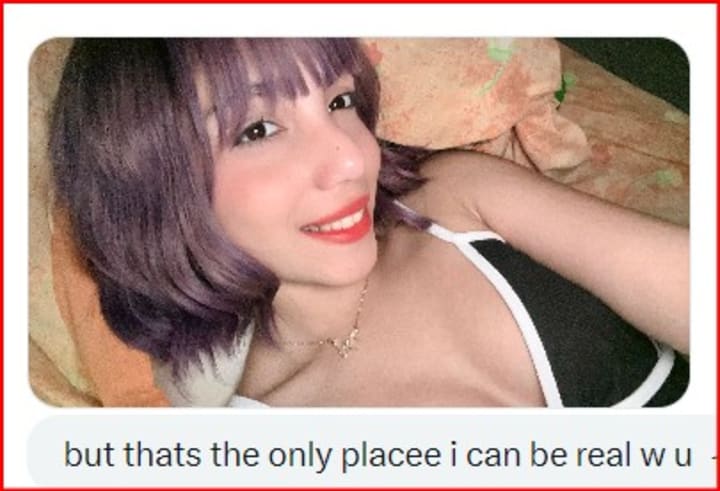
Instead of saying yes, I decided to slow down. I replied that I understood it was stressful, but that I had my own financial responsibilities and could not send money to someone I had never met. I suggested a video call so we could talk it through face to face. I also asked if she had tried local options, community support, or even talking to her bank directly again.
Her tone changed almost instantly. The warmth and patience that had been there before started fading. She became more insistent, saying I did not really care and that I clearly was just like everyone else who had used her. When I repeated that I would not send money, she tried guilt, telling me that I was leaving her in a desperate situation.
That switch in tone was the confirmation I needed. A person who truly cares about you might be disappointed but will still respect your boundaries. A scammer, on the other hand, makes your boundary the problem. That realization hurt, not because I was losing a real relationship, but because I had been investing real emotions into something that was built on a lie.
How I Protected Myself And Cut Off Contact
Once I understood what was happening, I felt a mix of embarrassment and relief. Embarrassment, because I could see how close I had come to falling fully into the trap. Relief, because I had pulled back before sending money or sharing any sensitive personal information. I reminded myself that being targeted by a Twitter dating scam did not mean I was foolish. It meant someone had deliberately studied how to use emotions as a weapon.
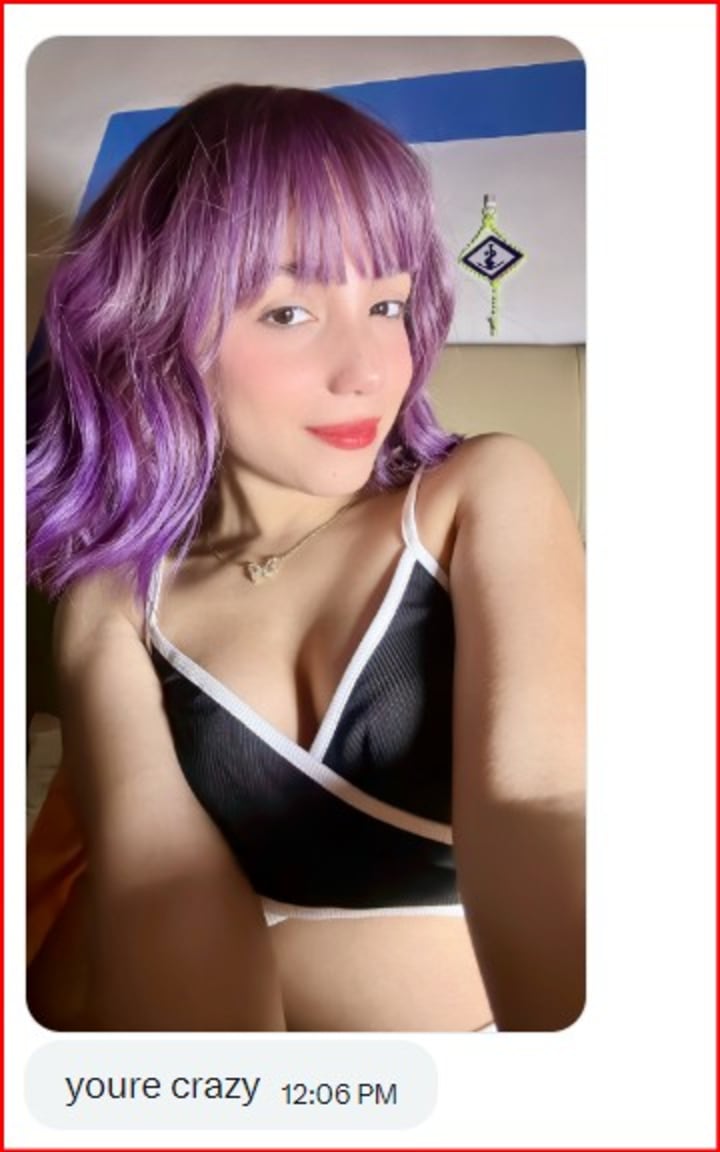
I told her clearly that I would not send money and that I was no longer comfortable continuing the conversation. She responded with a few more guilt laden messages, then a burst of anger, and finally silence. Shortly after, I blocked the account and reported it. I also went through my settings on Twitter (X), tightening my privacy controls and reviewing past conversations to make sure I had not shared anything I would regret.
Later, I searched for signs of similar accounts and realized that the pattern was not unique. There are many accounts built around an appealing aesthetic, emotional vulnerability, and subtle romantic tension, all designed to funnel people toward one goal: sending money or valuable information. Seeing that pattern helped me shift my perspective from self blame to awareness.
What This Taught Me About Social Media Romance Scams
This experience changed the way I view social media romance scams, especially on platforms that are not traditionally seen as dating apps. I used to believe that "real" online dating scams only happened on dedicated dating sites. Now I understand that a scammer only needs a platform that allows DMs, photos, and emotional storytelling. Twitter (X) checks all of those boxes.
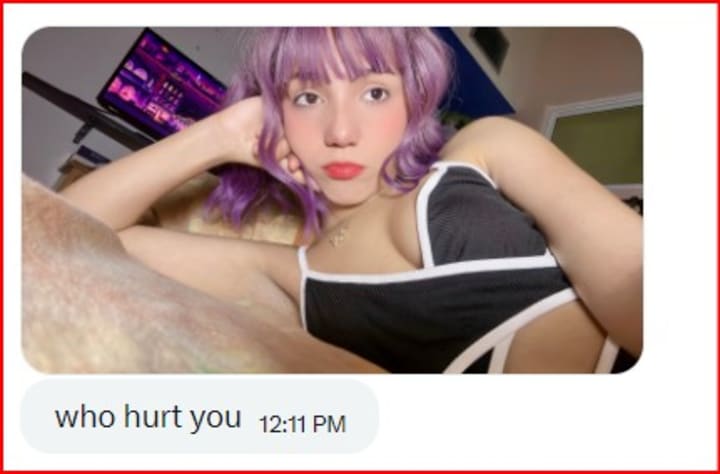
I also learned that scammers do not just prey on greed. They prey on loneliness, empathy, and the need to be seen. The hook is not always about quick money or investments. Sometimes it is about late night conversations, shared trauma, and the promise of someone who finally "gets" you. That makes social media romance scams feel more insidious, because they exploit the softer parts of who we are.
Another lesson was recognizing that a catfish on Twitter can be sophisticated. They might have a long history of tweets, interactions with other users, and even a network of accounts that engage with each other to appear real. What looks like a genuine person could be a carefully maintained profile operated by someone who has run the same script on dozens of people. Accepting that possibility is uncomfortable, but necessary.
Practical Habits I Use Now To Avoid Online Dating Scams On Twitter (X)
Since this near miss, I have changed how I approach any kind of online connection that begins with a DM, especially when there is a romantic tone. One of the first things I do now is slow down. If someone seems to be escalating intimacy very quickly, I pay attention to that speed instead of getting swept away by it. Real relationships take time. Scams move fast because they know the window before suspicion sets in is short.
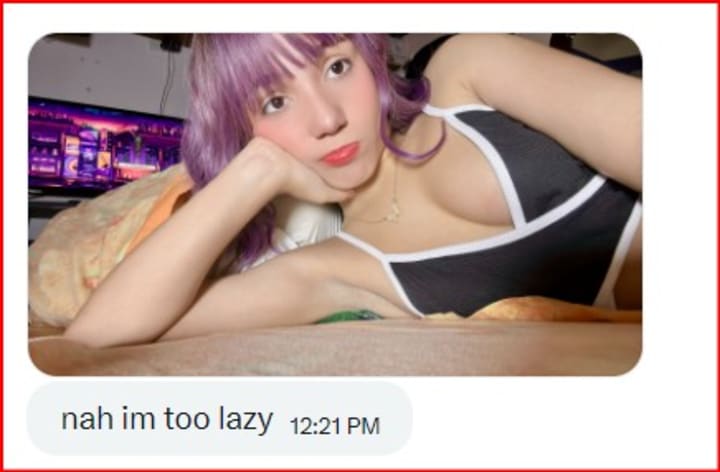
I also pay close attention to consistency. If their story about where they live, what they do, or how their life works keeps changing, I treat that as a serious warning sign. I gently test details with casual questions instead of letting emotional conversations drown out the inconsistencies. When photos feel too perfect, I remind myself that not every attractive account is fake, but every fake account tries to look appealing. That alone is enough reason to be cautious.
Another habit is setting a strict personal rule about money. I do not send money, gift cards, or financial information to anyone I have not met in person and built a genuine relationship with offline. It does not matter how convincing the story is, how emotional the plea becomes, or how much they say they will pay me back. That rule protects me from making decisions in the heat of a vulnerable moment.
Finally, I normalize asking for real time verification when things start to feel serious. A quick video call, a voice note that matches their photos, or even small proofs that tie their online identity to a real life presence all matter. If they always have an excuse to avoid anything that would verify who they are, I listen to that silence more than I listen to their words.
Final Thoughts: Protecting Your Heart And Your Wallet
Almost falling for an online dating scam on Twitter (X) was one of the most humbling experiences I have had online. It reminded me that intelligence is not a shield against manipulation and that scammers are not always obvious villains. Sometimes they arrive as attentive listeners, late night confidants, and people who seem to care. What protects us is not paranoia, but boundaries, patience, and the courage to question stories that feel a little too perfectly designed to tug at our hearts.
If you find yourself in a whirlwind Twitter romance that seems to be moving fast, especially if money or financial help enters the conversation, pause and step back. Ask yourself whether you truly know the person behind the screen or whether you have fallen in love with an idea built from curated photos and carefully worded messages. Remind yourself that it is better to be cautious and keep your trust for someone real than to learn the hard way that you were just the next name on a scammer's list.
My experience did not end with a drained bank account, and I am grateful for that. But it came close enough to change how I navigate every DM that feels a little too flattering. If sharing this story helps even one person stop and think before sending money, trusting blindly, or ignoring their instincts, then the uncomfortable memory is worth it. Your time, your attention, your emotions, and your money are all valuable. Treat them that way, especially on platforms where it is easy for anyone to pretend to be anyone else.